Direct answer
B2B buyers comparing connected feeders for specialist retail, marketplaces and private-label launches need a decision tool, not another list of attractive features. The purpose of automatic feeder food level sensor test is to prove that the production feeder identifies a genuinely low-food condition early enough for action without treating bridged kibble, a dirty window or a recent refill as the same event. The exact model, revision, market and channel must remain visible throughout the review.
The first two controls make the scope concrete. For Reference fill states, require this result: Acceptance condition: empty, low, usable and recently refilled states are defined by measured mass and feeder geometry rather than one app icon. Record the normal case, the foreseeable exception and the action that stops release. Retain A numbered reference fill states record with raw observations, dated sample identity and approval by the named product or quality owner as evidence. For Kibble and hopper coverage, verify this condition: Acceptance condition: approved kibble shapes, surface slopes, wall adhesion and central bridging are repeated at the intended hopper and sensor revision. Record the normal case, the foreseeable exception and the action that stops release. Record A numbered kibble and hopper coverage record with raw observations, dated sample identity and approval by the named product or quality owner; the boundary is A supplier statement or polished demonstration is not production evidence. The buyer still has to verify that approved kibble shapes, surface slopes, wall adhesion and central bridging are repeated at the intended hopper and sensor revision.
Why this decision belongs before the purchase order
The remaining work is specific to this decision: False and missed alerts — Acceptance condition: partial refills, hand movement, dust, grease, ambient light and device tilt do not create an unexplained low-food state or hide a real one. Record the normal case, the foreseeable exception and the action that stops release; Recovery path — Acceptance condition: the device and app return to the correct state after refill, cleaning, restart and network reconnection without an undocumented reset. Record the normal case, the foreseeable exception and the action that stops release; Service diagnosis — Acceptance condition: support can distinguish low food, jam, sensor obstruction, offline device and stale app data for the sold configuration. Record the normal case, the foreseeable exception and the action that stops release. Release is not a general approval. The last two gates are Recovery path, owned by Channel operations, when Recovery path evidence approved; open deviation assigned; sold revision identifiable; Service diagnosis, owned by After-sales owner, when Service diagnosis evidence approved; open deviation assigned; sold revision identifiable.
Start the review with one sentence describing the commercial decision. Then freeze the configuration in a header shared by the quotation, test record and artwork approval. A model name alone is not enough when firmware, plug, accessory or service scope can vary.
For each requirement, write the expected condition, test method, evidence file, owner and disposition. “Looks good” cannot be searched later; a numbered result linked to a batch and revision can. Keep raw evidence as well as the summary because screenshots and selected photos may hide timing or sequence.
Define the low-food promise
1. Reference fill states
Acceptance condition: empty, low, usable and recently refilled states are defined by measured mass and feeder geometry rather than one app icon. Record the normal case, the foreseeable exception and the action that stops release.
Evidence to retain: A numbered reference fill states record with raw observations, dated sample identity and approval by the named product or quality owner.
Procurement constraint: A supplier statement or polished demonstration is not production evidence. The buyer still has to verify that empty, low, usable and recently refilled states are defined by measured mass and feeder geometry rather than one app icon.
2. Kibble and hopper coverage
Acceptance condition: approved kibble shapes, surface slopes, wall adhesion and central bridging are repeated at the intended hopper and sensor revision. Record the normal case, the foreseeable exception and the action that stops release.
Evidence to retain: A numbered kibble and hopper coverage record with raw observations, dated sample identity and approval by the named product or quality owner.
3. False and missed alerts
Acceptance condition: partial refills, hand movement, dust, grease, ambient light and device tilt do not create an unexplained low-food state or hide a real one. Record the normal case, the foreseeable exception and the action that stops release.
Evidence to retain: A numbered false and missed alerts record with raw observations, dated sample identity and approval by the named product or quality owner.
4. Recovery path
Acceptance condition: the device and app return to the correct state after refill, cleaning, restart and network reconnection without an undocumented reset. Record the normal case, the foreseeable exception and the action that stops release.
Evidence to retain: A numbered recovery path record with raw observations, dated sample identity and approval by the named product or quality owner.
5. Service diagnosis
Acceptance condition: support can distinguish low food, jam, sensor obstruction, offline device and stale app data for the sold configuration. Record the normal case, the foreseeable exception and the action that stops release.
Evidence to retain: A numbered service diagnosis record with raw observations, dated sample identity and approval by the named product or quality owner.
Build representative hopper conditions
| Stage | Owner | Release condition |
|---|---|---|
| Reference fill states | Product and quality | Reference fill states evidence approved; open deviation assigned; sold revision identifiable |
| Kibble and hopper coverage | Supplier engineering | Kibble and hopper coverage evidence approved; open deviation assigned; sold revision identifiable |
| False and missed alerts | Procurement | False and missed alerts evidence approved; open deviation assigned; sold revision identifiable |
| Recovery path | Channel operations | Recovery path evidence approved; open deviation assigned; sold revision identifiable |
| Service diagnosis | After-sales owner | Service diagnosis evidence approved; open deviation assigned; sold revision identifiable |
For automatic feeder food level sensor test, the matrix deliberately runs from Reference fill states to Service diagnosis. Add a row only when it changes an owner, a piece of evidence or the release decision for the purchased configuration.
Challenge false-low and missed-low states
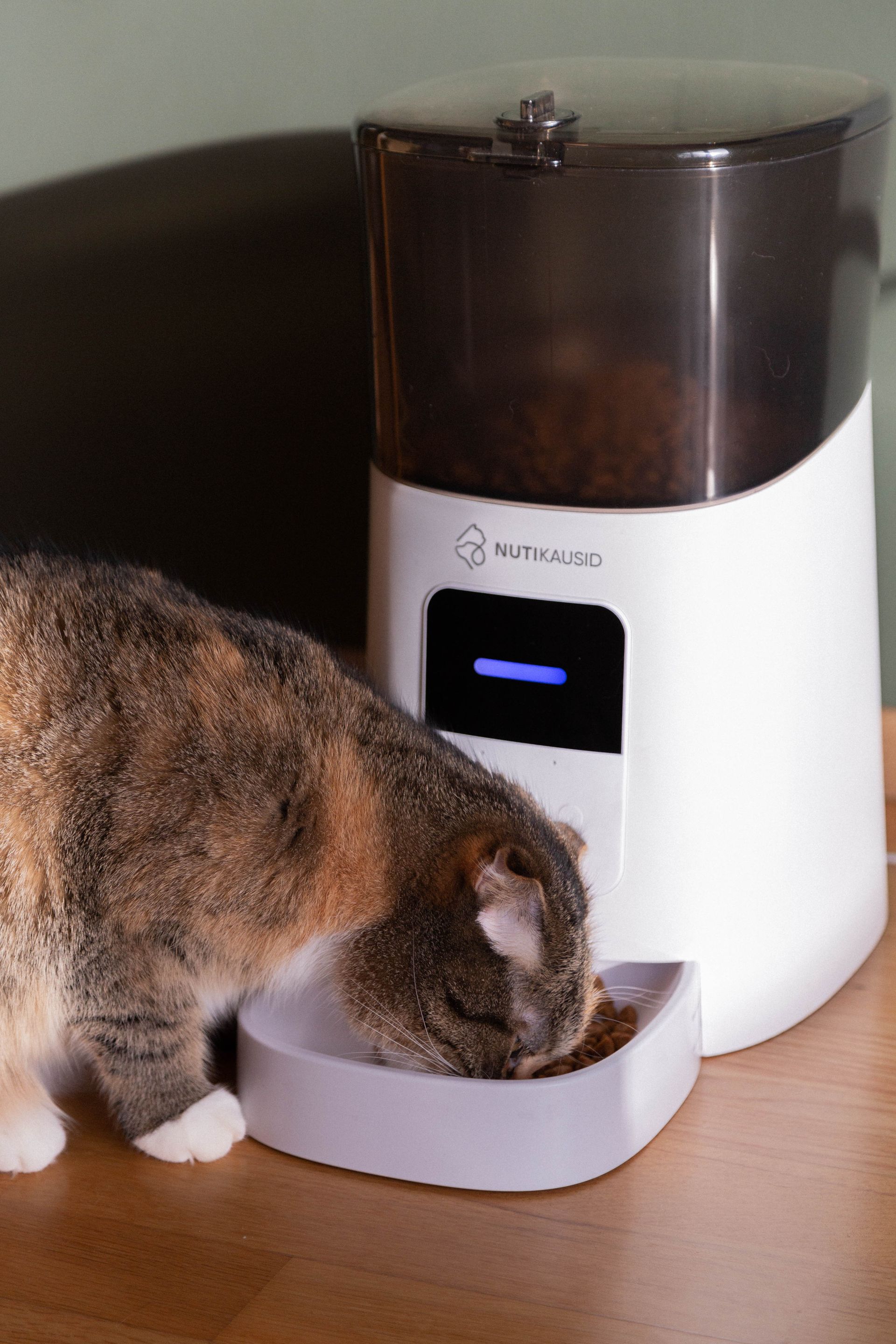
A distributor prepares a camera feeder with an optical food-level sensor and a translucent dry-food hopper for European specialist retail and marketplaces supported remotely. During sample review, the team finds that approved kibble shapes, surface slopes, wall adhesion and central bridging are repeated at the intended hopper and sensor revision. The quotation describes the feature, but its evidence does not identify the tested revision. Procurement freezes the configuration, asks the supplier to demonstrate that partial refills, hand movement, dust, grease, ambient light and device tilt do not create an unexplained low-food state or hide a real one, and routes the result through the gate for the device and app return to the correct state after refill, cleaning, restart and network reconnection without an undocumented reset. A second reviewer follows the record without help from the development engineer. The order is released only after the carton, support file and production sample point to the same decision. The exercise does not promise zero field failures; it makes the accepted boundary visible before inventory is divided among channels.
Verify refill recovery and alerts
- Freeze the purchased configuration before reference fill states
- Record the owner, method and release rule. Target condition: empty, low, usable and recently refilled states are defined by measured mass and feeder geometry rather than one app icon
- Freeze the purchased configuration before kibble and hopper coverage
- Record the owner, method and release rule. Target condition: approved kibble shapes, surface slopes, wall adhesion and central bridging are repeated at the intended hopper and sensor revision
- Freeze the purchased configuration before false and missed alerts
- Record the owner, method and release rule. Target condition: partial refills, hand movement, dust, grease, ambient light and device tilt do not create an unexplained low-food state or hide a real one
- Freeze the purchased configuration before recovery path
- Record the owner, method and release rule. Target condition: the device and app return to the correct state after refill, cleaning, restart and network reconnection without an undocumented reset
- Freeze the purchased configuration before service diagnosis
- Record the owner, method and release rule. Target condition: support can distinguish low food, jam, sensor obstruction, offline device and stale app data for the sold configuration
Questions to add to the RFQ or contract
- For “Reference fill states”, which file proves A numbered reference fill states record with raw observations, dated sample identity and approval by the named product or quality owner, and how will the parties record the boundary “A supplier statement or polished demonstration is not production evidence. The buyer still has to verify that empty, low, usable and recently refilled states are defined by measured mass and feeder geometry rather than one app icon”?
Release a supportable sensor claim
For product context, compare automatic feeder range and connected-device engineering. Buyers developing a branded configuration can review OEM and private-label feeder projects; marketplace and service teams can also use B2B operating model.
A useful supplier conversation starts with the evidence already defined, not with a request for a generic best price. request a food-level sensor review. Include the target country, channel, estimated volume and configuration so the response can distinguish standard capability, validation work and customization.