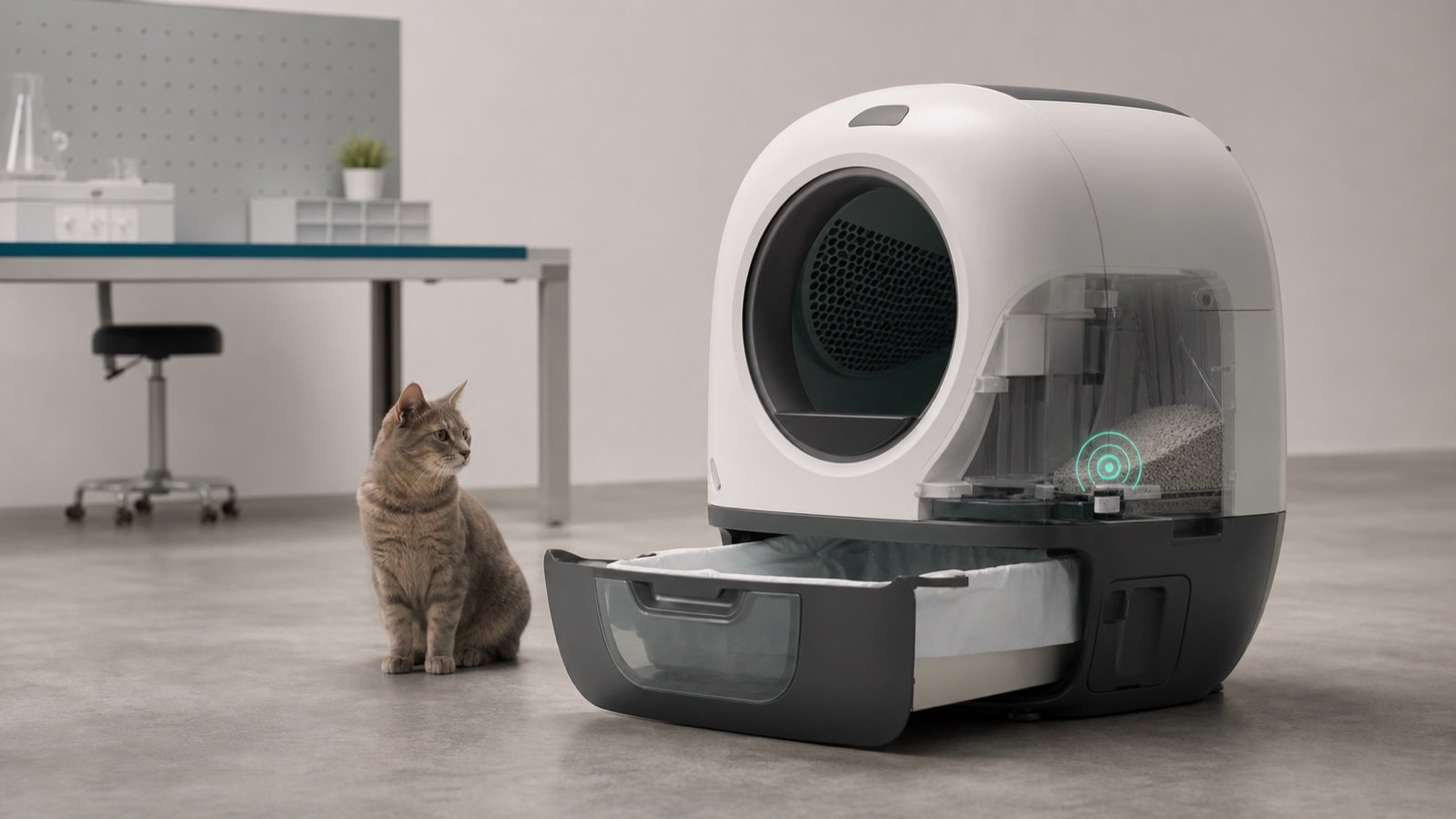
Direct answer
B2B buyers comparing automatic litter boxes for specialist retail, marketplaces and private-label programmes need a decision tool, not another list of attractive features. The purpose of smart litter box waste bin full detection test is to prove that the sold configuration warns at a useful, repeatable point without hiding usable capacity, missing an overflow risk or confusing a liner problem with a device fault. The exact model, revision, market and channel must remain visible throughout the review.
The first two controls make the scope concrete. For Reference capacity, require this result: Acceptance condition: the accepted fill boundary is defined by usable volume, safe clearance and removal workflow rather than one ideal bag or a marketing cycle count. Record the normal case, the foreseeable exception and the action that stops release. Retain A numbered reference capacity record with raw observations, dated sample identity and approval by the named product or quality owner as evidence. For Fill pattern, verify this condition: Acceptance condition: distributed, heaped, shifted and compacted waste patterns are repeated with the approved litter and liner because the sensor must not depend on a perfectly level surface. Record the normal case, the foreseeable exception and the action that stops release. Record A numbered fill pattern record with raw observations, dated sample identity and approval by the named product or quality owner; the boundary is A supplier statement or polished demonstration is not production evidence. The buyer still has to verify that distributed, heaped, shifted and compacted waste patterns are repeated with the approved litter and liner because the sensor must not depend on a perfectly level surface.
Why this decision belongs before the purchase order
The remaining work is specific to this decision: Liner and bin fit — Acceptance condition: the approved bag, rim, drawer position and replacement process do not block the sensing path or create a false-full state after normal handling. Record the normal case, the foreseeable exception and the action that stops release; Fouling and recovery — Acceptance condition: dust, residue, cleaning and bin removal are tested with a documented recovery route that restores the correct state without a hidden technician command. Record the normal case, the foreseeable exception and the action that stops release; Alert and diagnosis — Acceptance condition: device, app and support identify full, absent bin, obstructed sensor and reset failure as distinct conditions tied to the exact revision. Record the normal case, the foreseeable exception and the action that stops release. Release is not a general approval. The last two gates are Fouling and recovery, owned by Channel operations, when Evidence confirms that dust, residue, cleaning and bin removal are tested with a documented recovery route that restores the correct state without a hidden technician command; open deviations have an owner and the purchased configuration is identifiable; Alert and diagnosis, owned by After-sales owner, when Evidence confirms that device, app and support identify full, absent bin, obstructed sensor and reset failure as distinct conditions tied to the exact revision; open deviations have an owner and the purchased configuration is identifiable.
Define what full means for the sold bin
1. Reference capacity
Acceptance condition: the accepted fill boundary is defined by usable volume, safe clearance and removal workflow rather than one ideal bag or a marketing cycle count. Record the normal case, the foreseeable exception and the action that stops release.
Evidence to retain: A numbered reference capacity record with raw observations, dated sample identity and approval by the named product or quality owner.
Procurement constraint: A supplier statement or polished demonstration is not production evidence. The buyer still has to verify that the accepted fill boundary is defined by usable volume, safe clearance and removal workflow rather than one ideal bag or a marketing cycle count.
2. Fill pattern
Acceptance condition: distributed, heaped, shifted and compacted waste patterns are repeated with the approved litter and liner because the sensor must not depend on a perfectly level surface. Record the normal case, the foreseeable exception and the action that stops release.
Evidence to retain: A numbered fill pattern record with raw observations, dated sample identity and approval by the named product or quality owner.
Procurement constraint: A supplier statement or polished demonstration is not production evidence. The buyer still has to verify that distributed, heaped, shifted and compacted waste patterns are repeated with the approved litter and liner because the sensor must not depend on a perfectly level surface.
3. Liner and bin fit
Acceptance condition: the approved bag, rim, drawer position and replacement process do not block the sensing path or create a false-full state after normal handling. Record the normal case, the foreseeable exception and the action that stops release.
Evidence to retain: A numbered liner and bin fit record with raw observations, dated sample identity and approval by the named product or quality owner.
Procurement constraint: A supplier statement or polished demonstration is not production evidence. The buyer still has to verify that the approved bag, rim, drawer position and replacement process do not block the sensing path or create a false-full state after normal handling.
4. Fouling and recovery
Acceptance condition: dust, residue, cleaning and bin removal are tested with a documented recovery route that restores the correct state without a hidden technician command. Record the normal case, the foreseeable exception and the action that stops release.
Evidence to retain: A numbered fouling and recovery record with raw observations, dated sample identity and approval by the named product or quality owner.
Procurement constraint: A supplier statement or polished demonstration is not production evidence. The buyer still has to verify that dust, residue, cleaning and bin removal are tested with a documented recovery route that restores the correct state without a hidden technician command.
Release only a repeatable capacity promise
For product context, compare automatic litter box range and safety-led smart pet engineering. Buyers developing a branded configuration can review OEM and private-label litter projects; marketplace and service teams can also use B2B operating model.
A useful supplier conversation starts with the evidence already defined, not with a request for a generic best price. request a bin-detection acceptance review. Include the target country, channel, estimated volume and configuration so the response can distinguish standard capability, validation work and customization.